When I was nearing the last few weeks of pregnancy, one thing kept popping up in my mind: What exactly should I pack for delivery?
I remember sitting on my bed with my half-open suitcase, feeling overwhelmed, confused, and honestly… a little panicked. There are so many delivery essentials, and every mom online seemed to recommend something different.
So, like any first-time mom, I watched a LOT of videos, read endless blogs, checked hospital guidelines, and even asked my mom friends. After all that research, I finally created a delivery checklist that actually worked for me — practical, comforting, and truly helpful during my big day.
Now that I’ve been through it, I can confidently say:
You don’t have to watch countless videos like I did.
Here is exactly what I packed, what I actually used, and what made my delivery experience smoother. This is my honest, personal hospital bag checklist for mom and baby — from one mom to another.
Hospital Bag Checklist For Mom:
Clothing Essentials
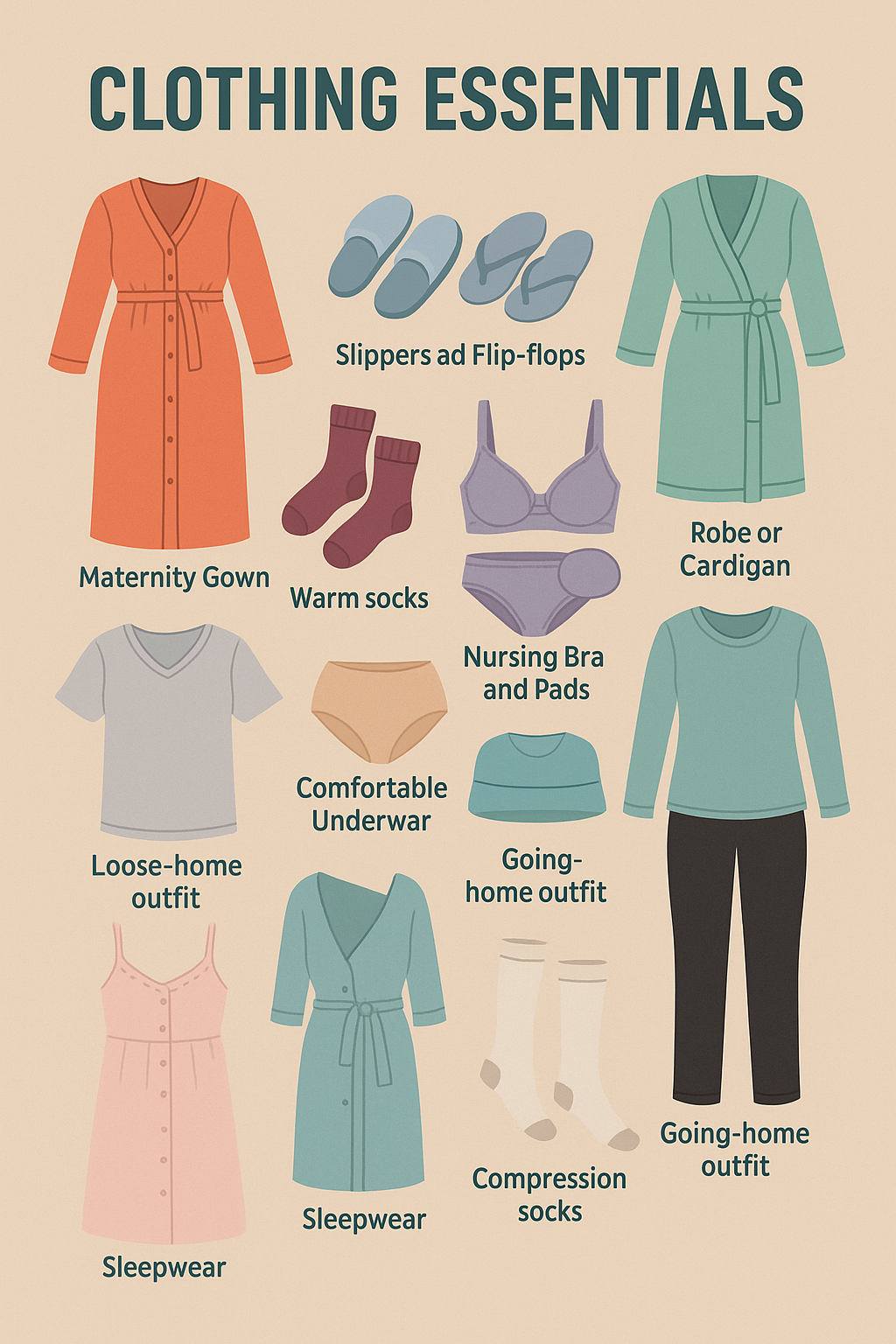
1. Maternity Gown
The first and foremost thing I packed was my own maternity gown. After watching so many videos, every mom said the same thing — hospital gowns are uncomfortable. And they truly are. Bringing my own soft, breathable maternity gown made such a difference during labor and breastfeeding. It gave me a sense of comfort and privacy when everything else felt chaotic. So when preparing your delivery packing, make sure this is at the top of your list of delivery essentials.
2. Slippers and Flip-Flops
Another thing you absolutely cannot forget to pack is a pair of comfortable slippers and flip-flops. Hospital floors are cold, and during labor, you end up walking around quite a bit. I used my slippers constantly — to go to the washroom, for walking during contractions, and even just to stretch my legs. Flip-flops were perfect for hospital showers. Trust me, these small delivery bag items bring huge comfort when you need it most.
3. Warm Socks
Warm socks may seem like a tiny thing, but during labor, my feet felt ice cold for no reason at all. I had watched many moms mention this in videos, and I’m so glad I listened. Having 2–3 pairs of thick, cozy socks kept me comfortable, especially in the AC rooms. When you’re preparing your delivery day checklist, add warm socks — they’re simple but surprisingly comforting when contractions hit.
4. Comfortable Underwear
Post-delivery, you don’t want anything tight, scratchy, or uncomfortable touching your skin. I packed soft, high-waisted cotton underwear after watching recommendation videos, and they were a lifesaver. They hold maternity pads well, don’t irritate stitches or incisions, and feel gentle when your body is healing. Your delivery kit items must include these — they’re not talked about enough, but trust me, you’ll thank yourself later.
5. Nursing Bras and Pads
I never knew how quickly milk leakage would start. Nursing bras made feeding so much easier, and the nursing pads prevented awkward leaks (especially with visitors around). These were one of the most important things needed for delivery, and I’m so glad I didn’t skip them. Whether you breastfeed or not, your breasts will feel tender and heavy — so this small prep goes a long way.
6. Loose, Comfortable Clothes
No matter whether you are having a normal delivery or a C-section, loose, comfortable clothes are essential for postpartum recovery. I packed soft two-piece sets, oversized shirts, and loose maternity pants because every video I watched said comfort matters more than style — and they were right. Your body feels sensitive and sore, so you need clothes that don’t cling or press. When thinking about things to pack for delivery, make sure your outfits allow easy breastfeeding and movement.
7. Going-home Outfit
For the going-home outfit, I chose something very simple — loose maternity pants and a soft top. Many moms forget that your belly still looks about 6 months pregnant afterward. So pack something stretchy, season-appropriate, and comfortable. This is one of those delivery packing items that seems small, but getting into comfortable clothes on your way home feels like a reward.
8. Robe or Cardigan
A lightweight robe is versatile, allowing you to cover up quickly when visitors arrive. It’s also useful if you feel cold or need an extra layer while walking around. Postpartum chills are quite common, with studies indicating that between 25% and 50% of postpartum women experience shivering or chills shortly after delivery. I used my robe while breastfeeding, walking around, and whenever visitors came. It gives a cozy, covered-up feeling without being too warm or heavy. Definitely add this to your hospital bag checklist for mom and baby.
9. Sleepwear
Don’t rely on hospital clothes for sleeping — they’re stiff and uncomfortable. I packed two soft, nursing-friendly nighties. After a tiring delivery, slipping into breathable sleepwear felt like such a relief. I had watched a mom say “bring clothes that feel like a hug,” and she was right. This is one of the most comforting things for delivery.
10. Compression Socks
I didn’t realise how swollen my feet would get after delivery until I experienced it myself. Compression socks help improve blood flow and reduce swelling, especially after long hours of lying in bed. These aren’t always talked about, but I’m so glad I packed them. If you want to avoid postpartum discomfort, this belongs on your delivery checklist.
Toiletries Essentials
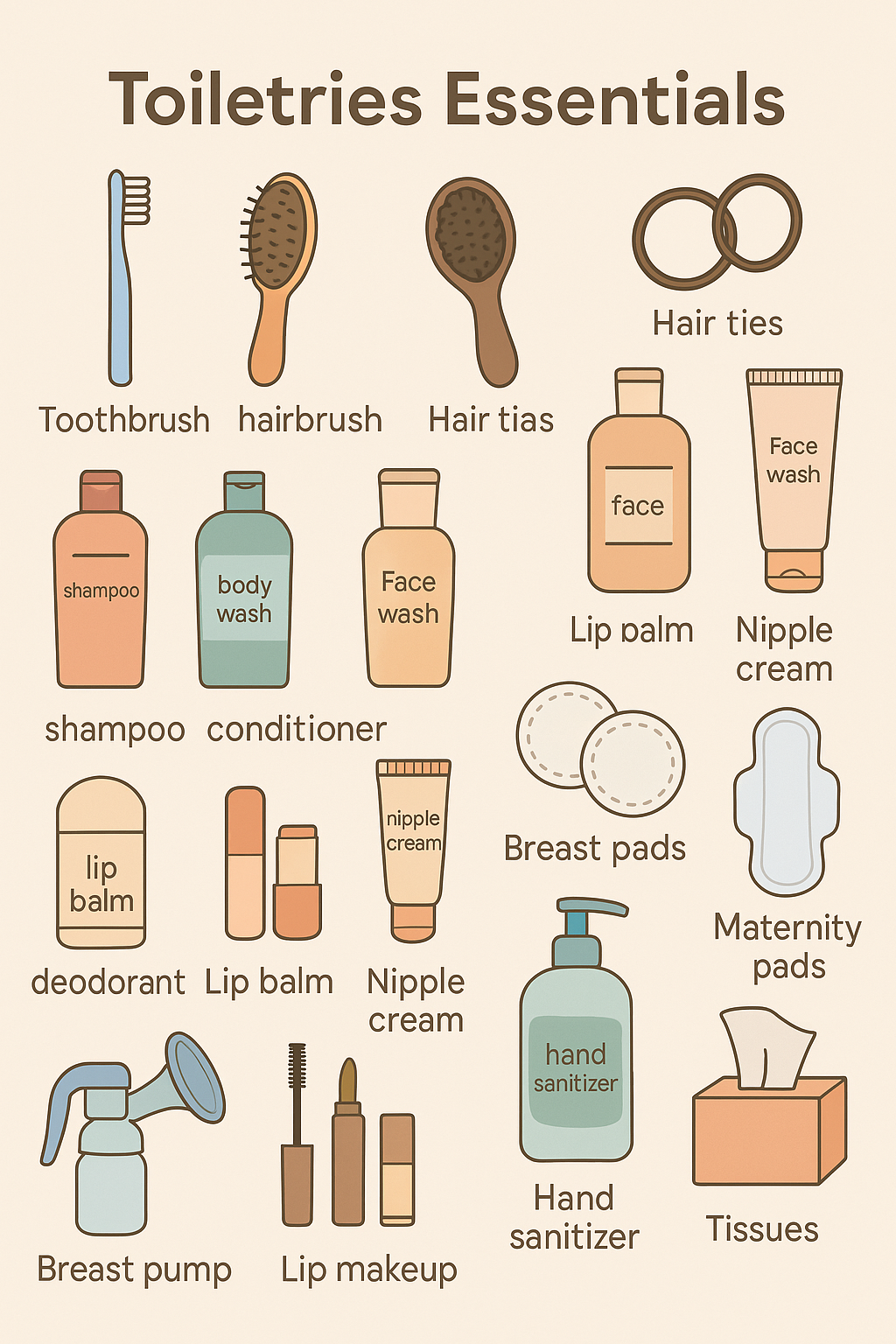
11. Toothbrush and Toothpaste
Labor can be long, and freshening up with your own toothbrush and toothpaste makes a big difference. I packed them because moms in videos kept repeating it — and I understood why once I reached the hospital. Having your own toiletries feels grounding during a very overwhelming time.
12. Hairbrush and Hair Ties
My hair was all over the place during labor, and tying it up helped me focus better. A hairbrush and hair ties may seem basic, but they’re truly essential things needed for delivery. You don’t want hair sticking to your face while you’re already exhausted.
13. Shampoo, Conditioner, and Body Wash
That first shower after delivery is unforgettable. I had packed travel-size shampoo and body wash because many moms said familiarity helps you relax — and it really did. Using my own products made me feel clean, fresh, and human again after hours of labor.
14. Face Wash and Moisturizer
A good face wash and moisturizer kept my skin hydrated and helped me feel fresh despite no sleep and constant sweating. Hospitals can make your skin dry, so this is an important part of your delivery kit items.
15. Deodorant
This was a blessing. Post-delivery hormones make you sweat a lot, and using my perfume-free deodorant made me feel much better when visitors came. Definitely add this to your delivery packing.
16. Lip Balm
Hospital air is surprisingly dry. My lips were cracking badly until I applied lip balm. This tiny product is a huge comfort and a must-have in your delivery bag items.
17. Nipple Cream
Breastfeeding is beautiful but painful at the start. My nipple cream helped tremendously with soreness and cracks. It’s one of those delivery essentials that saves you from unnecessary discomfort.
18. Breast Pads
Leaks are real — and sudden. Breast pads kept me dry and comfortable throughout my stay. A small but important part of your delivery essentials.
19. Maternity Pads
Postpartum bleeding is heavy, and hospital pads didn’t work for me. My own high-absorbency maternity pads felt more secure and comfortable. These should be at the top of your what to pack for delivery list.
20. Breast Pump
The list of essential things to pack for delivery without talking about breast pumps is incomplete. Breastfeeding is often surrounded by myths, such as the idea that pumping decreases milk supply or that you should only nurse directly. I brought my pump because of all the videos saying it helps maintain supply — and that was true for me. It relieved engorgement and helped me feed better. If you’re unsure, pack it anyway.
21. Makeup Essentials
I know makeup is the last thing on your mind during labor, but trust me, a tiny touch-up can make you feel human again. After hours of contractions, sweat, and zero sleep, I looked in the mirror and barely recognized myself. That’s when my little pouch with kajal, compact, and lip tint felt like magic. I wasn’t trying to look glamorous; I just wanted to feel like me again. And honestly, those small touch-ups made my first photos with the baby look fresh and memorable — no regrets at all.
22. Hand Sanitizer and Tissues
One thing I didn’t realize initially was how many hands would reach out to touch the baby — nurses, relatives, visitors. Having a hand sanitizer within quick reach made me feel so much more confident about hygiene. And tissues? I ended up using them for everything: unexpected spills, sudden sneezes, wiping my face after crying (thanks, hormones), and even during breastfeeding when things got a little messy. This duo seems basic, but during delivery and postpartum, they become your everyday lifesavers. Definitely don’t forget them.
Crucial and Comfort Items
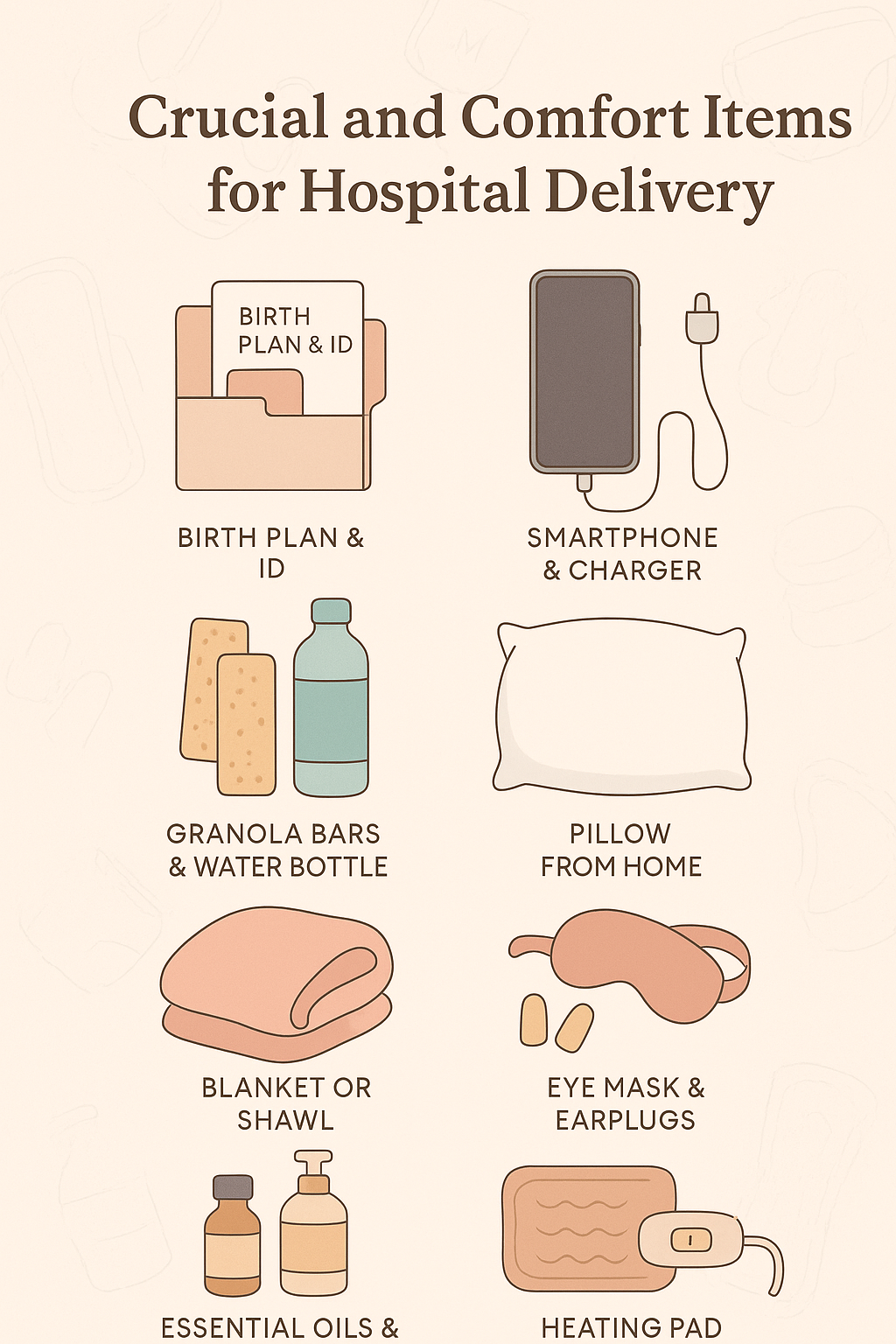
23. Birth Plan and ID/Documents
When my contractions started, I realized how important it was that all my documents were kept together. I wasn’t in a state to think straight, so having my birth plan, ID, and insurance papers in one waterproof folder saved time and stress. My husband simply handed it over at the admission counter, and everything went smoothly. It felt good knowing my preferences were clearly written down.
24. Phone and Charger
My phone became my biggest distraction during those long hours — timing contractions, listening to calming music, and later capturing those first baby moments. The long charger cable I packed turned out to be a smart decision because hospital plug points are never where you need them. My husband kept checking that the phone stayed charged, especially with all the calls and updates going on.
25. Snacks and Drinks
During labor, I had no idea how much my energy would drop. The snacks I packed — granola bars, nuts, and glucose biscuits — became really helpful. My husband offered them whenever he saw I was fading. And honestly, after delivery, when hunger suddenly hit, those snacks felt like heaven. Hospital food doesn’t always come on time, so packing your own is a lifesaver.
26. Water Bottle
Hydration became something I didn’t even think about until I felt my mouth drying up between contractions. The straw bottle I carried made drinking so much easier when I couldn’t sit up. My husband kept it next to me and reminded me to sip often. Staying hydrated helped me feel a little more in control during a time when everything else felt unpredictable.
27. Pillow From Home
Lying on the hospital bed made me miss my own pillow so much. Thankfully, we had packed it. When I finally got a chance to rest, that soft, familiar pillow felt like comfort from home. It supported my neck better and made those short naps actually relaxing. It’s such a simple thing, but it made a huge difference after delivery.
28. Blanket or Shawl
Hospitals can get unexpectedly cold, especially at night. The shawl I carried became my cozy layer, whether I was walking around or resting after delivery. My husband kept covering me with it whenever he noticed I was shivering. That soft, warm touch made the environment feel less harsh and gave me the comfort I needed during those long hours of waiting.
29. Eye Mask and Earplugs
Trying to sleep in a hospital is almost impossible — lights switching on, nurses walking in, machines beeping. The eye mask and earplugs I packed helped me block out just enough noise and brightness to catch small pockets of sleep. My husband took them out of our bag when he saw me struggling to rest. Those few minutes of sleep felt priceless.
30. Essential Oils or Calming Sprays
A gentle lavender spray made such a big difference for me. In the middle of all the tension and hospital smells, that familiar scent instantly calmed my mind. My husband sprayed a little on my pillow when I started feeling anxious. It didn’t reduce the contractions, of course, but it created a tiny moment of peace in a very overwhelming environment.
31. Massage Oil or Lotion
Back pain during early labor felt intense, and the lotion we had packed came to the rescue. My husband used it to gently massage my back, and it eased the tension more than I expected. Even after delivery, when breastfeeding made my shoulders stiff, that same lotion helped soothe the soreness. It’s one of those items you don’t realize you’ll need until you do.
32. Heating Pad or Hot Water Bottle
Post-delivery cramps surprised me with how strong they were. The heating pad we brought provided the exact warmth I needed on my lower belly and back. My husband helped warm it and place it whenever the pain increased. That steady heat gave me comfort and helped my body relax when everything felt tender and sore.
Hospital Bag Checklist For Newborns:
Clothing Essentials
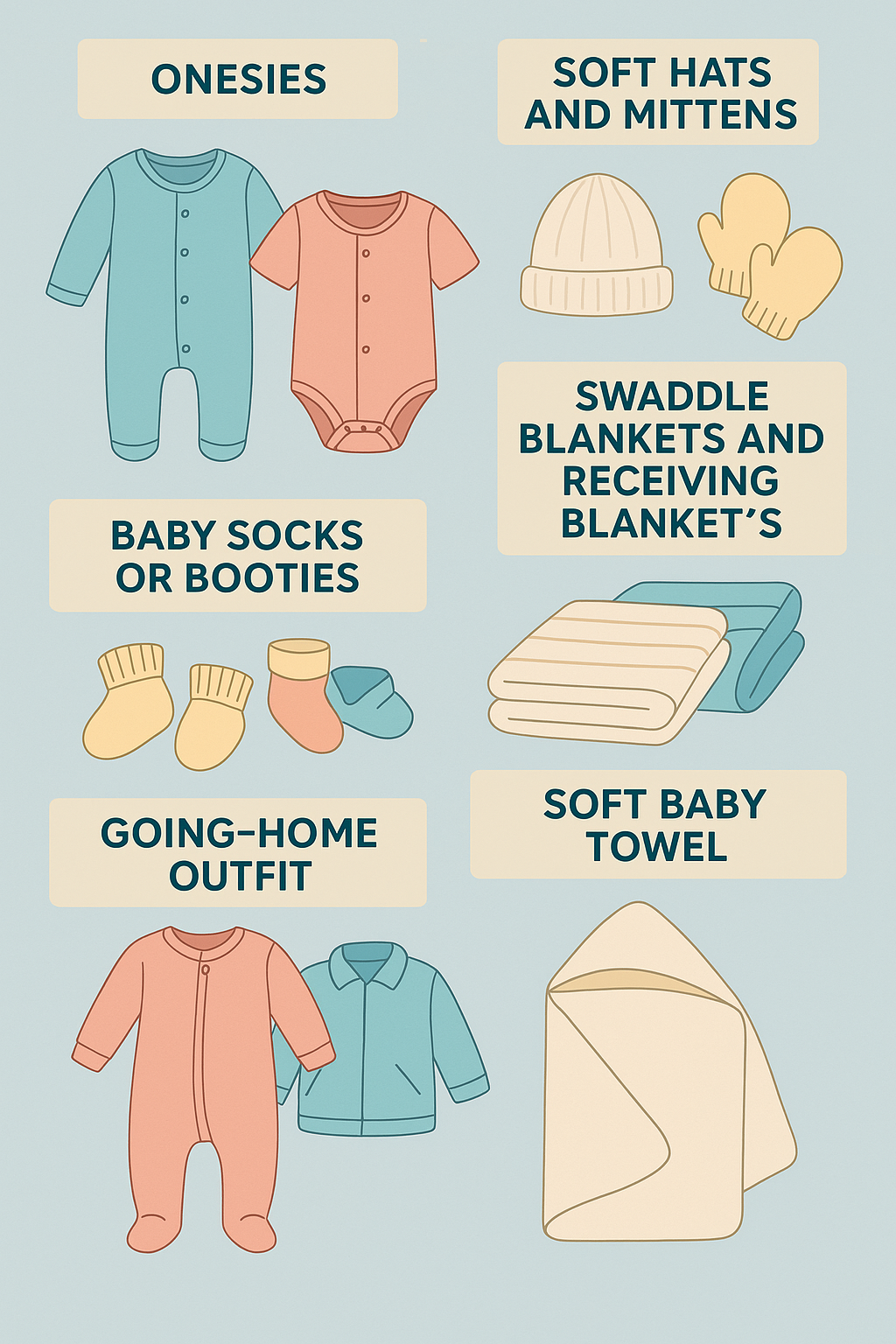
33. Onesies (newborn and 0-3 month sizes)
Babies vary in size at birth, so having both newborn and slightly larger onesies ensures a good fit. Onesies with snap closures make diaper changes easier. Look for soft, breathable fabrics to keep the baby comfortable. If you want to know more about newborn clothing essentials, you read our another blog.
34. Soft Hats and Mittens
Newborns lose heat quickly, especially through their heads and extremities. A soft hat helps maintain their body temperature, while mittens prevent them from scratching their delicate skin with their tiny, sharp nails.
35. Baby Socks or Booties
Even in warm hospitals, newborn feet can get cold. Soft, well-fitting socks or booties keep their feet warm. Choose materials that are gentle on sensitive skin, like cotton or bamboo.
36. Swaddle Blankets and Receiving Blankets
Swaddling helps soothe newborns by mimicking the feeling of being in the womb. Receiving blankets are versatile for swaddling, burping, or using as a clean surface. Bring at least two of each in case of spills or accidents.
37. Going-home Outfit
Choose something cute yet practical, considering the weather. A footed onesie, soft pants, and a light jacket work well for colder weather, while a simple onesie with a light blanket suffices in warmer months. Make sure the outfit is easy to put on and take off, as newborns can be wiggly.
38. Soft Baby Towel
Hospitals usually provide towels, but they can be rough on a newborn’s delicate skin. A soft, hooded baby towel is gentler and can be used after the baby’s first bath.
Other Crucial Items
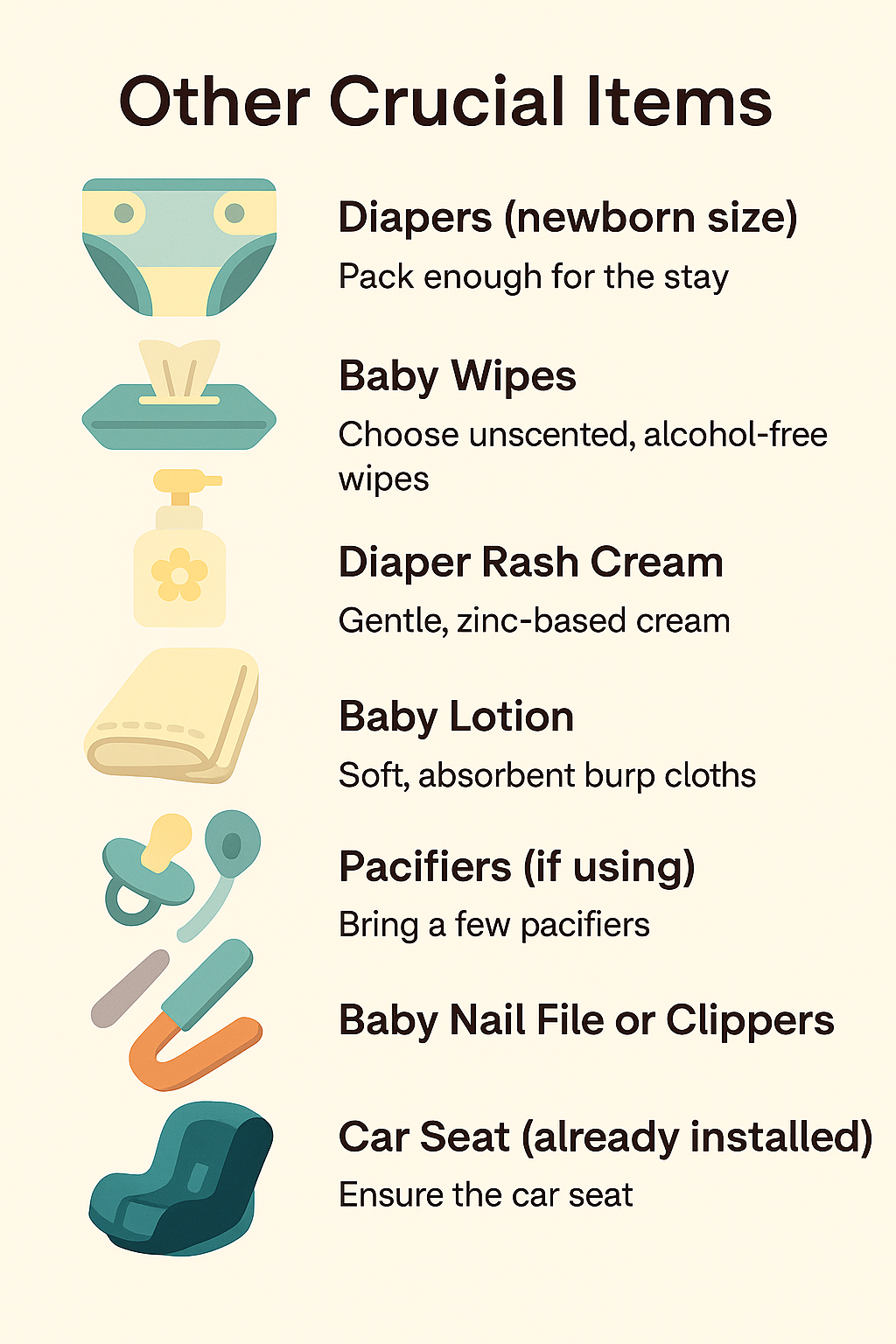
39. Diapers (newborn size)
Among all the baby things we packed, diapers honestly felt like the most important. Newborns need so many changes, and I remember feeling relieved that we carried enough. The hospital did give a few, but they finished quickly. Having our own soft, hypoallergenic diapers made me feel prepared and kept the baby comfortable. It’s one thing I was really glad we didn’t underestimate.
40. Baby Wipes
Unscented, alcohol-free wipes were a lifesaver. I used them not just for diaper changes but also to gently clean the baby’s hands and face. Newborn skin is so sensitive, so I felt better knowing I had safe, gentle wipes instead of relying only on whatever the hospital provided. They came in handy way more often than I expected.
41. Diaper Rash Cream
My baby actually never got a diaper rash, but I still started applying a thin layer of rash cream from day two as a preventive step. I had heard so many moms talk about how quickly rashes can appear, so having a gentle, fragrance-free zinc-based cream made me feel prepared. It gave me peace of mind knowing the baby’s skin was protected right from the beginning, even though we never had an issue.
42. Burp Cloths
I didn’t expect how often the baby would spit up in those first few hours. The soft burp cloths we packed saved my clothes so many times. They were super absorbent and easy to wash. It became one of those items I kept pulling out over and over again. Honestly, you can never pack too many burp cloths!
43. Pacifiers (if using)
We actually didn’t end up using pacifiers at all, but we still carried them because so many YouTube videos recommended them. I thought, “Better safe than sorry.” Even though they stayed in the bag, it felt good knowing we had a few sterilized ones ready just in case the baby needed comfort. So no regrets carrying them — just in case moments matter.
For Partner/Support Person
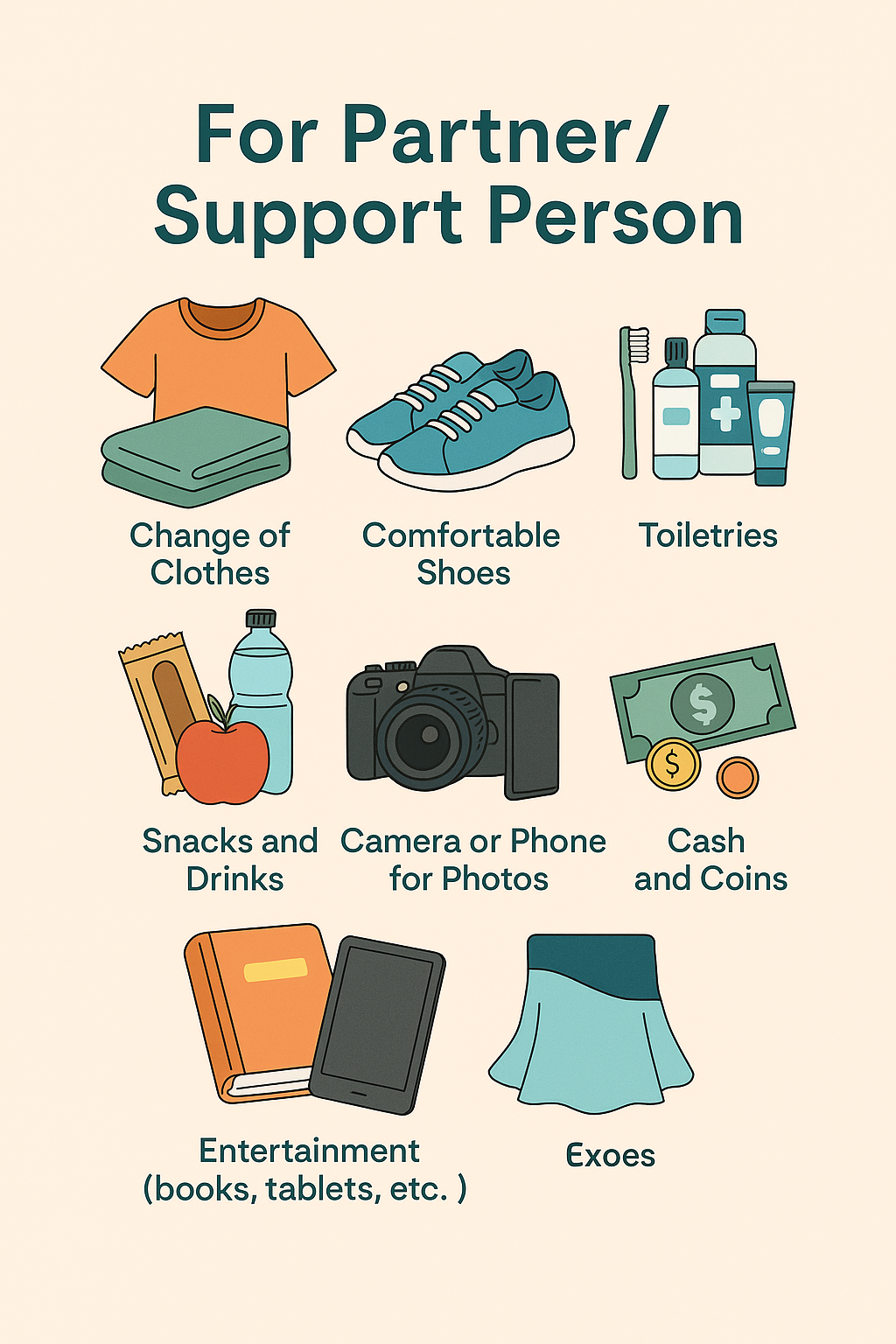
47. Change of Clothes
Labor can be long, and staying fresh is essential for your partner or support person. Comfortable, layered clothing works best as hospital rooms can vary in temperature.
48. Comfortable Shoes
There may be a lot of walking, both during labor and when running errands or getting supplies. Choose supportive, easy-to-slip-on shoes for comfort throughout the stay.
49. Toiletries
Basic items like a toothbrush, toothpaste, deodorant, and face wash help your partner feel refreshed. If they stay overnight, shampoo, a razor, and a change of undergarments are also helpful.
50. Snacks and Drinks
Labor can take hours or even a day or two. Hospital cafeterias may have limited hours, so having snacks and bottled drinks on hand keeps energy levels up. Consider protein bars, fruit, and water.
51. Camera or Phone for Photos
Documenting those first moments is important. A dedicated camera may offer better quality, but a phone is more convenient. Make sure it’s charged, and bring extra batteries or a power bank.
52. Cash and Coins
Not all hospital vending machines or parking areas accept cards. Having cash on hand ensures quick access to snacks, drinks, or parking fees. A small amount of change can be handy for lockers or payphones.
53. Entertainment (books, tablets, etc.)
There can be long stretches of downtime during labor or recovery. Books, a tablet loaded with shows, or a laptop help pass the time. Headphones are useful to avoid disturbing the mother or other patients.
Final Thoughts
These were some essential things to pack for delivery. Packing your hospital bag ahead of time will help reduce stress and ensure you have everything you need. Customize your list based on your preferences and the hospital’s guidelines.
Remember, a little planning now means more peace of mind later and this hospital checklist for mom and baby would make your journey into parenthood a little smoother and more comfortable.