
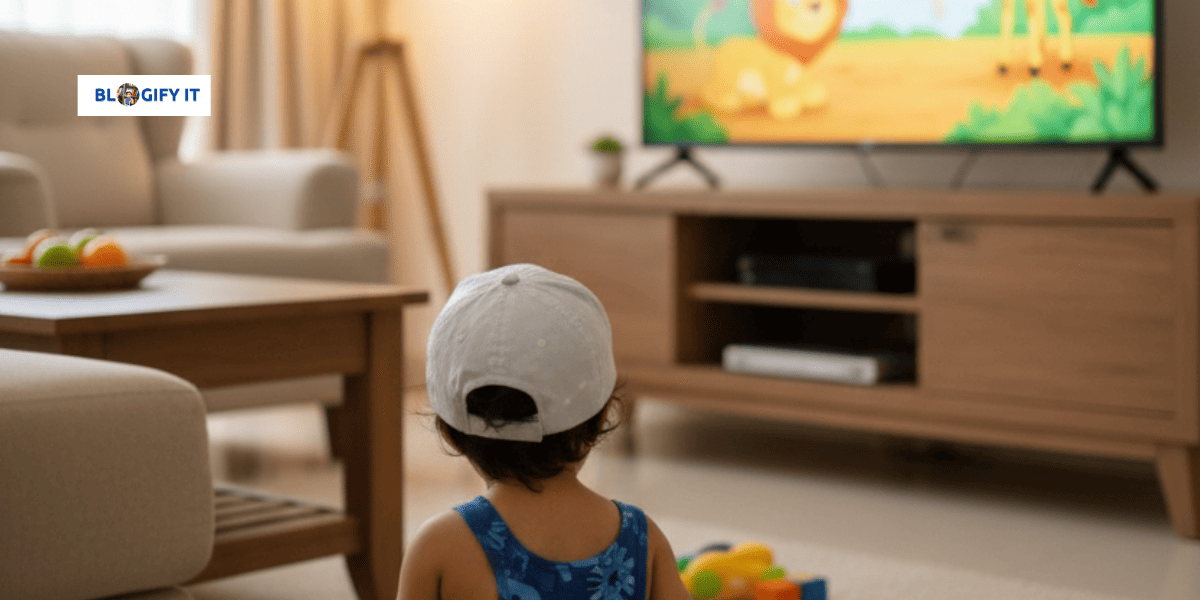
Let me be honest with you, the whole screen time debate? It keeps most of us parents up at night, doesn’t it? We see our little ones staring at those glowing screens, and somewhere in the back of our minds, a tiny voice whispers, “Am I messing up my child’s development?”
Trust me, I’ve been there. And I’m still there sometimes.
In today’s world, screens are everywhere: phones, TVs, tablets, and laptops. It’s almost impossible to raise a child without some exposure. So the real question isn’t whether our kids will see screens, but how much is too much screen time for toddlers?
Today’s Parents Are More Aware (And More Worried!)
One thing I truly feel is that today’s parents are much more aware than earlier generations. We read articles, follow parenting pages, watch expert reels, and Google every small doubt. We know about:
- Short attention spans
- Eye strain
- Sleep problems
- And the scary term everyone uses now – mobile addiction in kids
In India, especially, where smartphones are part of daily life, screen time has become a common parenting struggle. From online classes to YouTube rhymes to cartoons during meals – screens slip in very easily.
We are constantly trying to balance:
- Keeping our kids engaged
- And protecting them from overexposure
And honestly? It’s not easy at all.
What Do the Experts Actually Say?
So let’s talk about what doctors and experts recommend.
According to the American Academy of Pediatrics (AAP):
- Under 18 months: No screen time at all (except video calls with family)
- 18–24 months: Only high-quality content, and parents should watch together
- 2–5 years: Maximum 1 hour per day of quality content
- 6 years and above: Consistent limits that don’t affect sleep, play, or physical activity
The World Health Organization (WHO) also gives similar advice – especially stressing that children under 5 should spend more time in physical play than on screens.
These guidelines exist for a reason. Too much screen time in early years has been linked with:
- Delayed speech
- Poor social skills
- Hyperactivity
- Sleep disturbances
- And a higher risk of screen addiction later
But here’s something very important I’ve learned as a parent: These are guidelines, not strict rules. Every child is different. Every family situation is different.
My Real Experience with Screen Time
Now, let me share what actually happened in my home with my daughter, who is now 3 years old.
The First Year: Zero Screen Time
For the first year, I didn’t show her any screen at all. No phone, no TV, no tablet. And honestly, it wasn’t that hard. Babies are naturally curious. They are fascinated by:
- Faces
- Sounds
- Toys
- Even their own hands and feet
At that age, real-life interaction is more than enough stimulation.
After 1 Year: The Occasional Screen
After she turned one, things changed a little – not in a planned way, but just because life happened.
There were times when:
- We were busy
- Or tired
- Or had nothing else to engage her with
So we let her watch something for 10–15 minutes, maybe once a week. Mostly nursery rhymes or simple cartoons.
I remember feeling guilty even about that. But it wasn’t a daily habit, and she didn’t demand it.
Age 2: The 30-Minute Routine
When she crossed 2 years, we slowly made it 30 minutes a day. Some days she watched. Some days she didn’t, especially when we went out, visited relatives, or spent time outdoors. And something interesting happened. On days she didn’t get screen time… she didn’t even ask for it.
That’s when I realized: Screens become a habit only when we make them a habit.
Now at Age 3: Still 30 Minutes (Plus Family TV)
Now she is 3, and we still stick to around 30 minutes of her own screen time daily. But yes, I’ll be honest – she also watches TV when we are watching something as a family. Is that ideal according to experts? Maybe not. But for us:
- We sit together
- We talk about what’s happening
- We laugh, react, and discuss
So it becomes more like family bonding, not just passive watching.
What I’ve Noticed About Her Development
This is the part most parents worry about the most – “Is screen time affecting my child?” In my case, I can genuinely say: she’s doing really well.
- She started speaking full sentences at 15 months
- Her speech is clear
- She learns new words quickly
- She remembers songs, rhymes, numbers, and stories
She is curious, expressive, and socially active. Is this because of limited screen time? I can’t say for sure. But I can say that moderate and mindful screen time has not harmed her development at all.
If you’re worried about speech, I’ve written a detailed post here: Is it normal for a 3-year-old not to talk properly?
What I Think Actually Makes the Difference
From my personal experience, it’s not just about minutes on a timer. It’s about how screens are used.
1. Quality Over Quantity
What your child watches matters more than how long. Educational shows, rhymes, stories, and interactive content – these are much better than random videos or fast, loud cartoons.
2. Co-Viewing Is Powerful
When you sit with your child and watch together:
- You explain things
- They ask questions
- You interact
This turns screen time into learning time instead of just staring time.
3. Balance Is Everything
Screens should be just one small part of the day. Your toddler should also have:
- Free play
- Outdoor time
- Books
- Pretend play
- Conversations
If screens replace all these, that’s when problems start.
4. No Screens During Meals or Before Bed
We are quite strict about this. Mealtime is for eating and talking. Bedtime is for stories, cuddles, and winding down. Screens before sleep can disturb sleep quality and make kids more restless.
5. Don’t Use Screens to Control Emotions
This one is very important. If we give a phone every time:
- They are bored
- They cry
- They throw a tantrum
They start depending on screens for emotional comfort. Sometimes boredom is good. It pushes kids to become creative.
Mobile Addiction in Kids: A Real Concern
Mobile addiction in kids is becoming very real, especially in India. Children are getting personal phones at very young ages now – sometimes even before 10.
I’ve already started thinking about this for my daughter, and I wrote about it here: Right time to give a phone to your child (as per experts)
Short answer? It’s much later than most parents think.
My Advice? Trust Your Gut
I’m not a doctor or an expert. I’m just a mom trying to raise a child in a digital world. Here’s what I truly believe:
- Start with expert guidelines
- Observe your child closely
- Set boundaries that work for your family
- Don’t compare with other parents
- And please, don’t guilt yourself
We are raising kids in a world our parents never had to deal with.
The Bottom Line
Is 30 minutes of screen time too much for a toddler? According to strict rules, maybe slightly.
According to real-life parenting, it’s perfectly manageable.
My daughter is:
- Healthy
- Happy
- Social
- Curious
- Developing well
Screens are part of her life, but they don’t control her life. And that, for me, is the real goal. If your toddler is:
- Sleeping well
- Playing actively
- Talking and interacting
- And not throwing tantrums for screens
Then take a deep breath. You’re doing just fine. At the end of the day, parenting is not about being perfect. It’s about being aware, present, and trying your best.


